
Using drawing at work (even if your job has nothing to do with creativity)
Most people who draw at work are designers, illustrators, or creatives of some kind.
You're probably not.
And yet, you think visually. You sketch things out in your notebook. You'd rather draw a diagram than write three paragraphs. You've always worked that way, quietly, without ever calling it a skill.
The question is whether that instinct has a place in your actual job.
It does. And it's more useful than you think.
I found that out the hard way. Seven years ago I was working as a headhunter at Michael Page - a hard sales job with no obvious room for drawing. At the same time I was working on my first children's book, spending every spare hour on it. At some point the gap between the two started to feel strange.
If I use drawing to think and communicate in my own time - why does it have no place at work?
It turned out it absolutely could.
I later joined a boutique consultancy called Ink Strategy, where drawing wasn't decoration, it was a tool for thinking, aligning, and explaining inside organizations. That experience changed how I see visual communication entirely.
In this article I'll share four concrete ways to use drawing in non-creative work. No talent required. No artistic background needed. Just practical techniques that help ideas land, stick, and make sense.
1. Presenting ideas: make structure visible
Most people think of presentations as slides.
I mostly think of surfaces.
Sometimes that’s PowerPoint. More often it’s a whiteboard. A flipchart works just as well. The tool matters less than the intent.
When you’re presenting, your job isn’t to repeat the content. It’s to show how the content fits into a larger picture. That’s where drawing becomes useful.
Visuals are not particularly good at listing information. But they’re excellent at showing structure. And structure becomes visible through relationships.
Instead of explaining things one by one, you let people see how things connect.
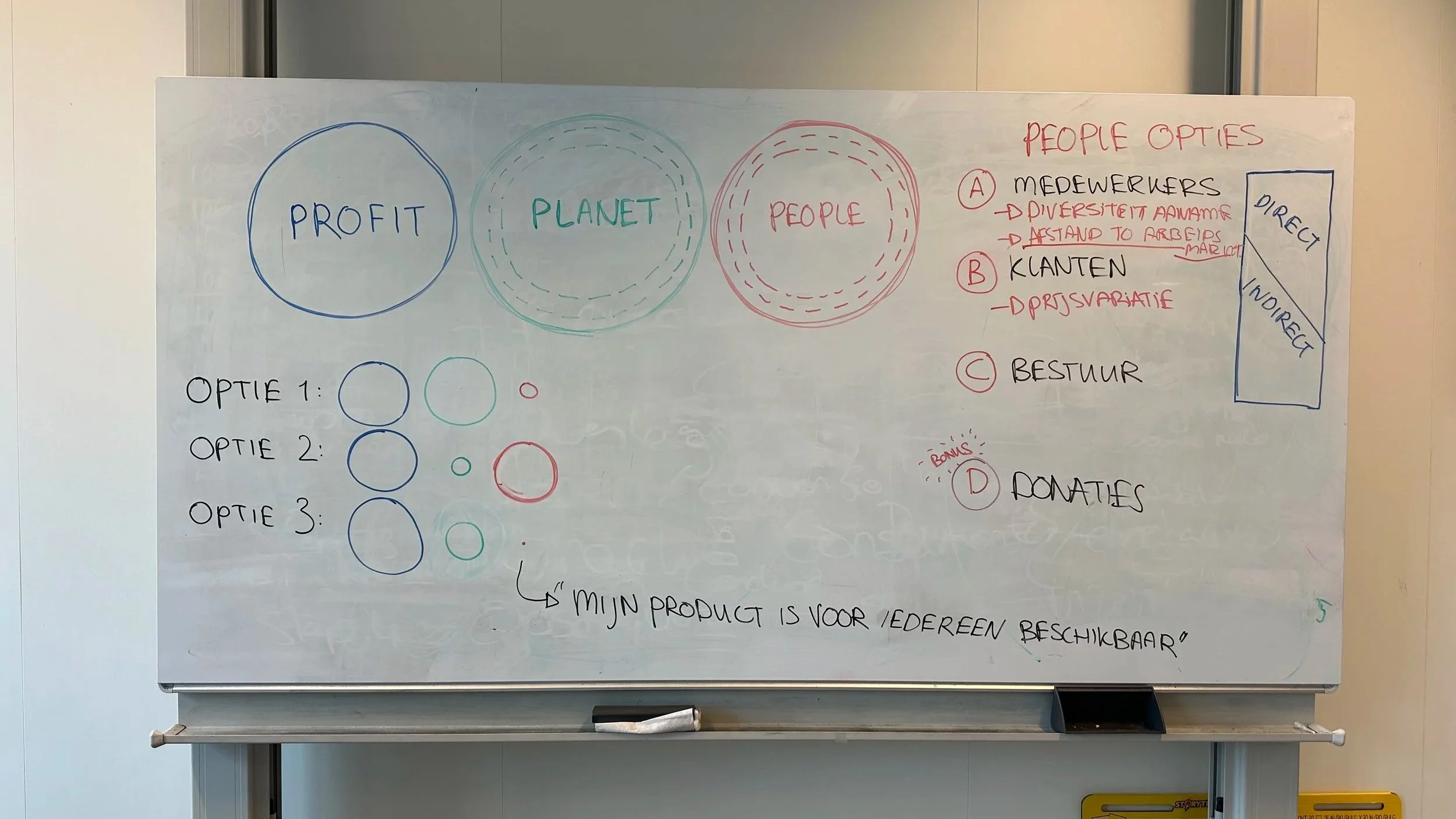
For example, when I draw something like People, Planet, and Profit on a whiteboard, I’m not explaining each concept separately. I’m showing how they overlap, where tension exists, and why decisions in one area affect the others.
You don’t need illustrations for that. Simple visual elements already do a lot of work:
diagrams and arrows
rough graphs or tables
boxes and lines
With just those, you can immediately show:
what belongs together
what comes before or after
what supports what
where trade-offs exist
Because everything is visible at the same time, people don’t have to keep the whole story in their head. They can look at it.
You can keep it extremely minimal or, if it fits you and the situation, be more expressive. Both approaches work, as long as the structure is clear.
The key shift is this: You’re not decorating information - you’re externalizing structure.
That’s why drawing works so well when presenting. It doesn’t replace your message.
It gives your message a shape people can understand in one glance.
2. Collecting ideas: making thinking visible
When people think of drawing at work, they usually imagine lines on a whiteboard. But visual communication doesn’t always start with drawing. Often, it starts by simply making thinking visible.
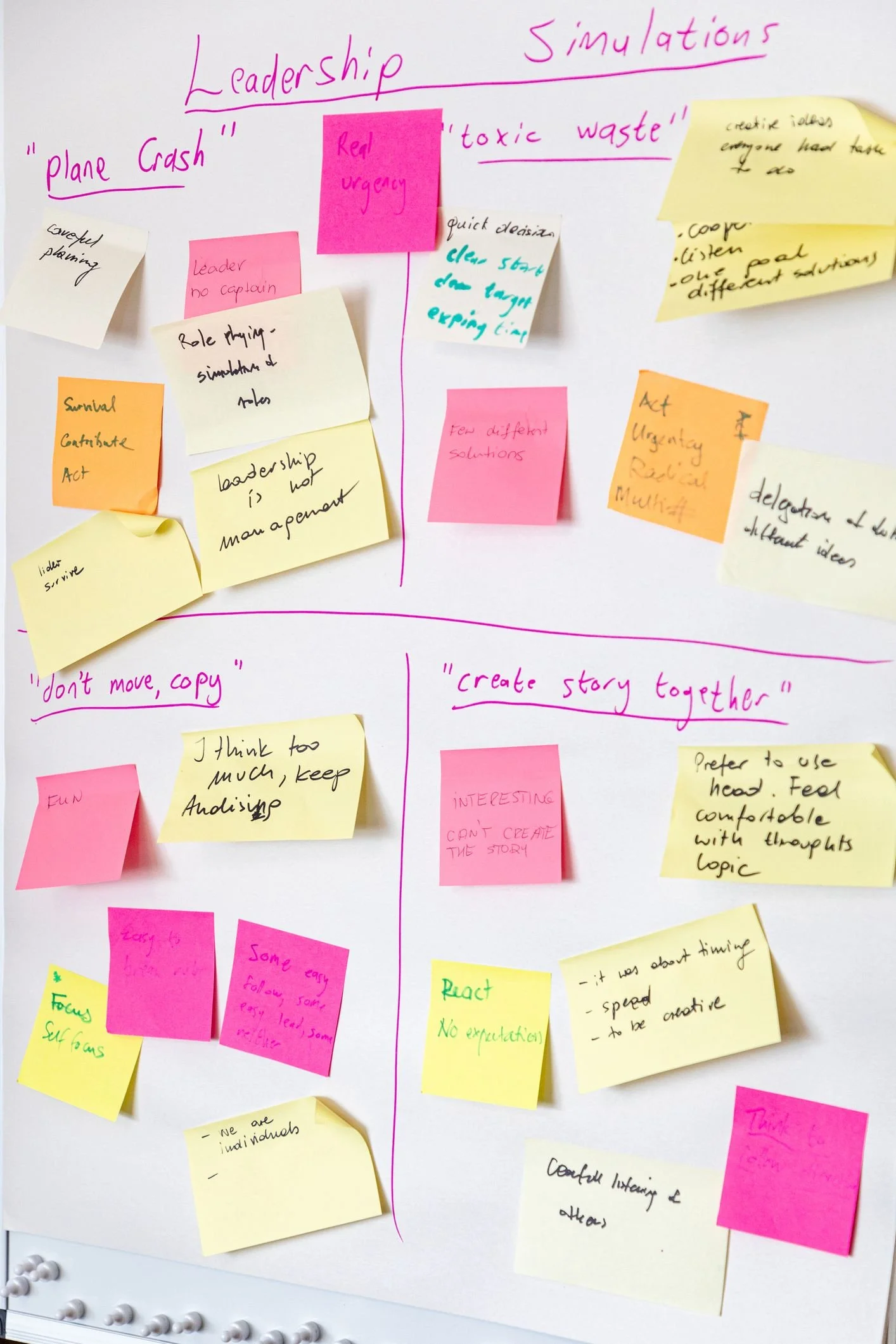
This is where Post-its and word webs shine.
In almost every group setting, the same problem shows up: a few people talk a lot, while others think just as much - but say less. That doesn’t mean they have fewer ideas. It usually means the format doesn’t suit them.
By letting people write ideas down first, Post-its, keywords, short phrases, you’re already working visually.
Without adding a single drawing, you:
slow the conversation down
make ideas visible before they compete
give everyone equal space
Ideas no longer live only in people’s heads or in the flow of conversation. They have a place in the room.
Once ideas are visible, something important happens.
People stop reacting only to each other and start responding to what’s on the wall.
Whether that wall is filled with Post-its or a simple word web doesn’t really matter. What matters is that thinking is no longer sequential and spoken - it’s shared and spatial.
You’re no longer managing opinions.
You’re managing objects in space.
3. Thinking for yourself: drawing as a private language
This one happens mostly in your notebook, before anyone else is involved.
No audience. No pressure. No aesthetics.
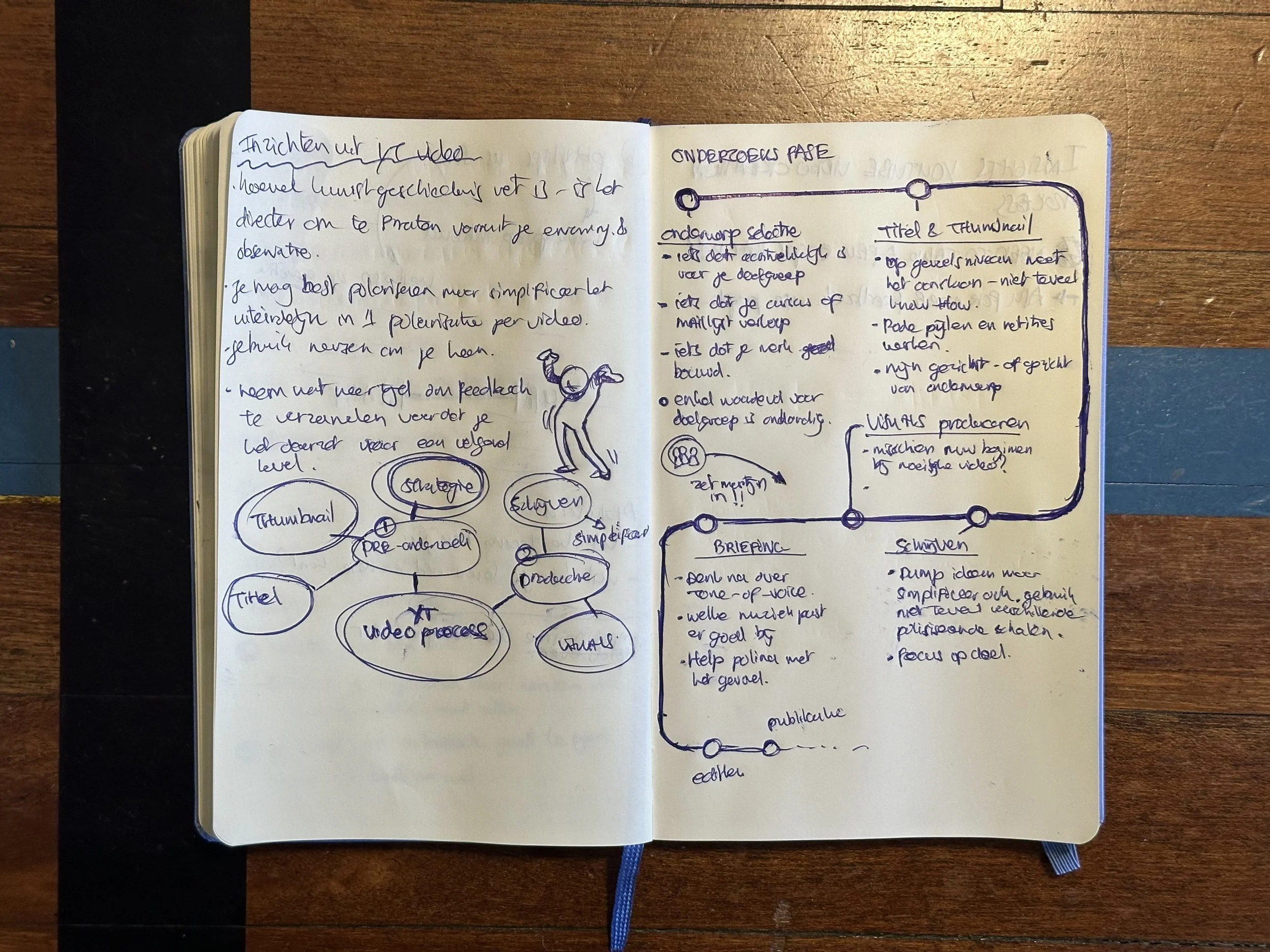
I use it most when something feels stuck - a conversation I need to prepare for, a decision that isn't quite clear yet, a process I'm trying to understand. Instead of staring at a blank document or going in circles in my head, I put it on paper.
That might look like a rough diagram of how two things relate. An arrow that shows what leads to what. A box around ideas that belong together. None of it would make sense to anyone else, and that's fine. It's not made for anyone else.
The point isn't to produce something. It's to think more clearly by making the thinking visible, even if only to yourself.
A notebook drawing that takes three minutes can replace twenty minutes of circular thinking.
4. Aligning teams: making thinking tangible together
This is the most powerful, and the most complex, way of using drawing at work.
I did this for years while working with teams on strategic and organizational questions. What I noticed again and again is this: people talk a lot, but they don’t always fully understand what they’re saying themselves.
That usually doesn’t come from a lack of intelligence or effort. It comes from the fact that spoken language stays abstract. Ideas sound reasonable, but they float. Everyone hears something slightly different.
That changes the moment you force yourself to make those ideas visible.
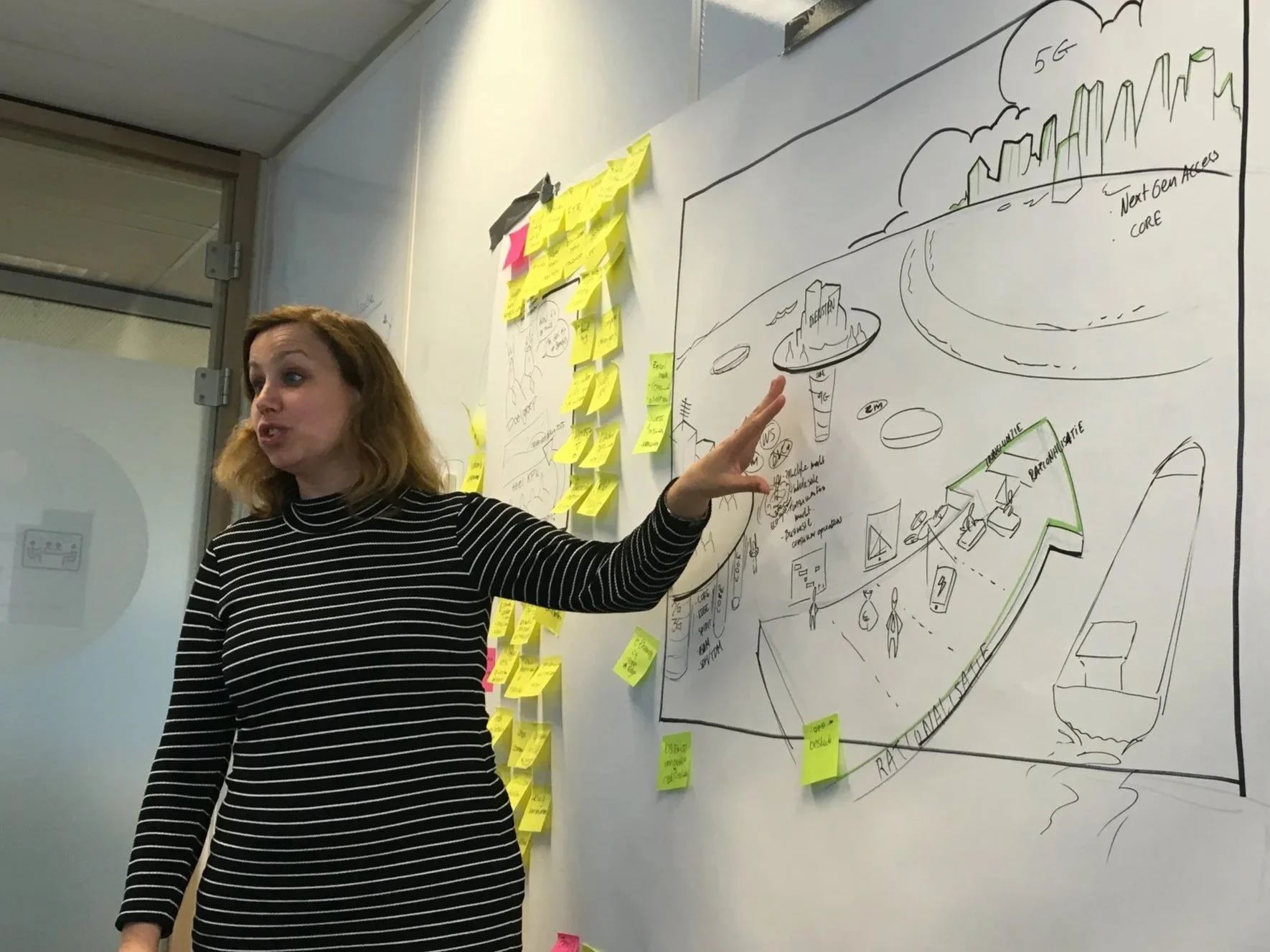
When you start visualizing what’s being said - live, in the room - things slow down. At first it feels vague. Sometimes even uncomfortable. The drawing is incomplete. Awkward. Clearly not “right” yet.
And that’s exactly why it works.
Because now, instead of reacting to each other’s words, people react to something concrete. They can point at it. Question it. Adjust it. Notice contradictions they didn’t hear before.
The drawing isn’t there to be correct.
It’s there to make thinking tangible.
As the visual evolves, so does the conversation. What started as opinions slowly turns into structure. Patterns appear. Gaps become visible. Misunderstandings surface - not as conflict, but as something you can work with.
Alignment doesn’t happen because everyone suddenly agrees. It happens because everyone can see the same thing.
At some point, a more stable visual emerges. Not as a goal in itself, but as a snapshot of shared understanding.
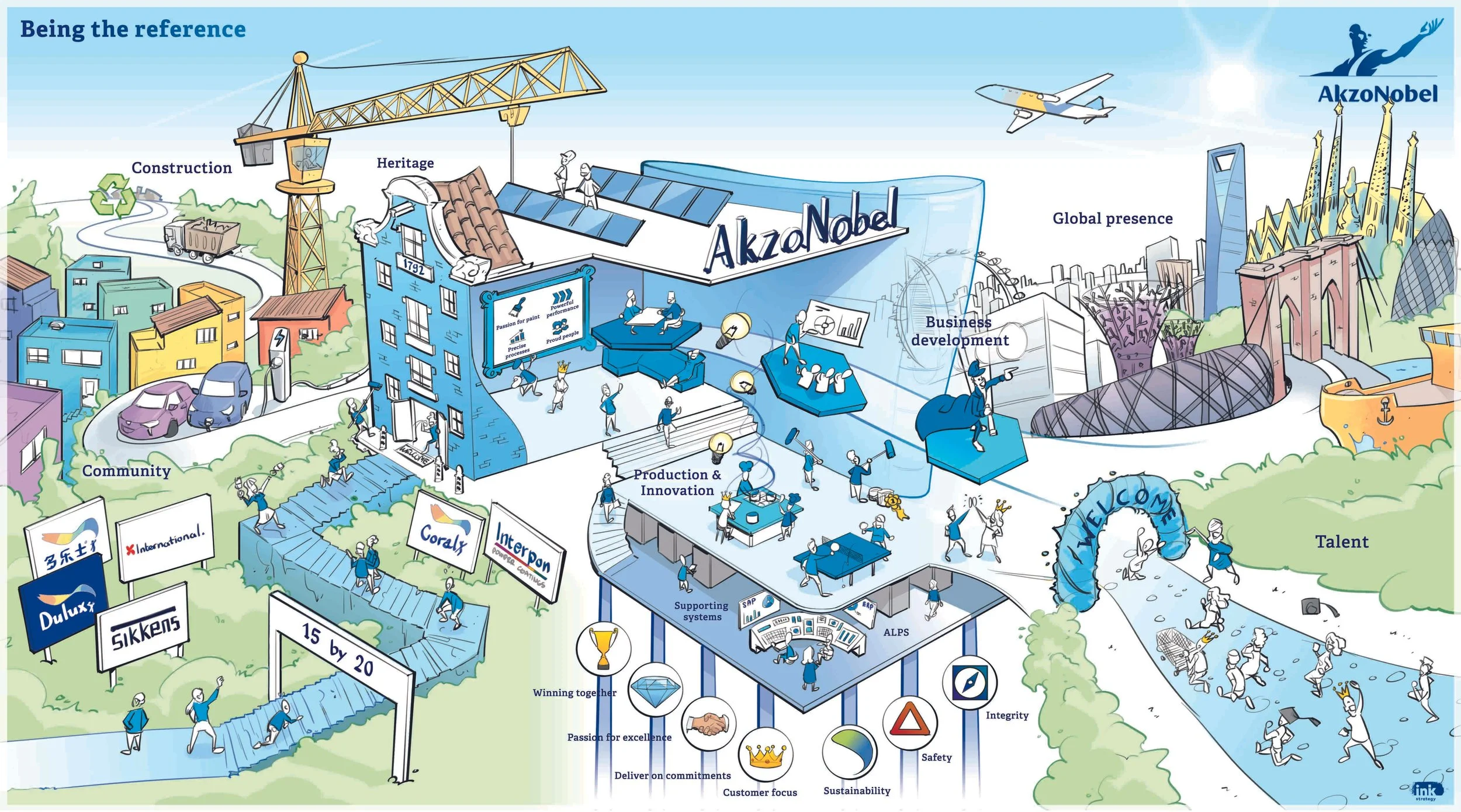
It’s important to get this right: the finished drawing is not the solution. It’s the residue of a process where vague ideas were forced to become visible, discussable, and adjustable.
The real outcome isn’t the visual on the wall.
It’s a team that understands what it’s doing, and why, in the same way.
Drawing here isn’t about making things look good.
It’s about giving complex thinking a surface where it can finally settle.
A final thought
Using drawing at work sounds simple, but it isn't always easy.
Not because drawing is hard. But because it asks you to slow down, make thinking visible, and sometimes sit with vagueness a bit longer than feels comfortable.
Most professionals never do this - not because they can't, but because nobody ever showed them it was an option.
That's exactly why I created Visual Communicators. It's a course for people who think visually, work in non-creative roles, and want to use drawing as a serious thinking and communication tool. Not as decoration. Not as art. As a way to work more clearly.
We cover how to make structure visible, how to work visually with others, how to facilitate real alignment, and how to build confidence using drawing in actual work situations.
No talent required. If this article resonated, you'll feel at home there.
