
Struggling to draw from imagination? You're giving your brain too much too soon
If you've ever tried to draw figures from imagination you know how deceptive it is. You see artists like Kim Jung Gi making it look effortless… Then you pick up your pen and your brain immediately hits the emergency brakes.
Why does this happen? Why can others draw from imagination while most of us freeze?
It's not talent. It's not even anatomy.
Research by Nelson Cowan (2010) found that working memory can only hold 3–5 chunks of information at once. A human figure in a dynamic pose contains hundreds of forms, angles and relationships, easily over a thousand chunks.
So when you sit down to draw from imagination, your brain doesn't freeze because you lack talent. It freezes because you're asking it to juggle a thousand things at once. Of course it slams the brakes.
The fix is simple in principle: reduce the chunks. Give your brain something it can actually hold.
That's what simplifying does.
Most beginners make this harder than it needs to be
Most beginners take a result-driven approach. You focus on what the drawing should look like, muscles, folds, cool poses, fancy lines. You copy KJG or animations on Instagram, post it, get a few likes, feel good for a minute… But when you try inventing something yourself, everything collapses.
The alternative is a process-driven approach. And this is where simplifying comes in.
What is simplifying?
Simplifying means stripping something down to one idea so your brain can actually understand it.
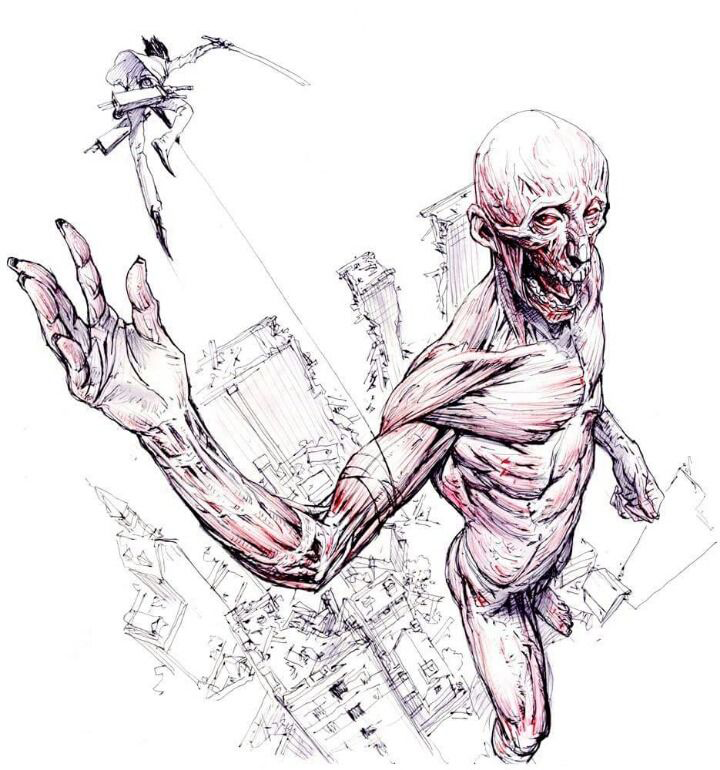
Take this drawing by Kim Jung Gi. It looks simple, right? But inside it he's juggling form, gesture, perspective, anatomy, clothing, storytelling and composition. Most beginners try to copy all of these at once, and when we draw from imagination, we expect to use these skills like people who spent years mastering them. No wonder your brain freezes.
How simplifying helps
By simplifying the body into basic forms, boxes and cylinders, you create a mannequin. You turn a complex figure into something clear and buildable.
The mannequin shows you the underlying structure: how the torso tilts, how the limbs angle, how the gesture flows.
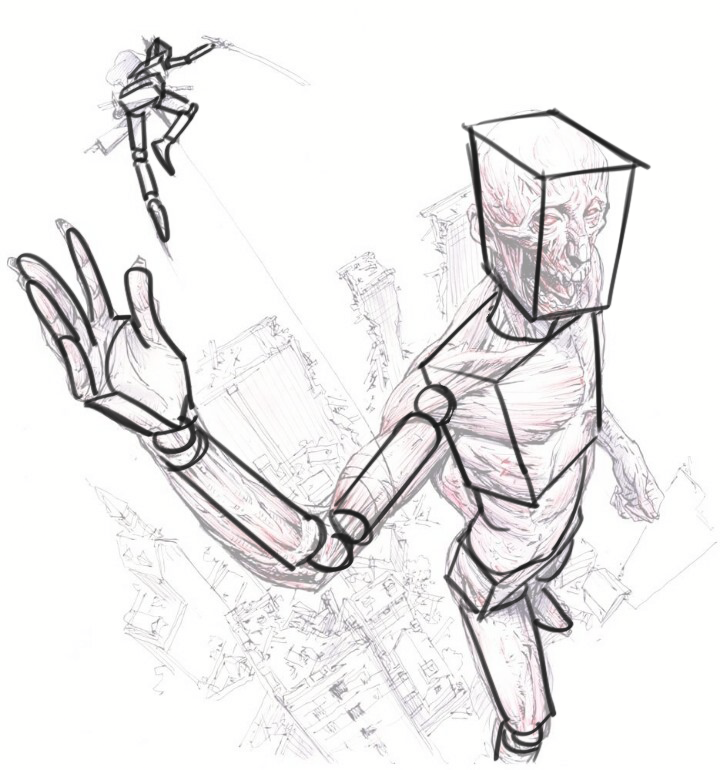
It's like stepping inside the artist's head. You're learning how they think, not just what they draw. And once you can pose the mannequin in different angles, you're already halfway to drawing figures from imagination.
That is the entire point of a process-driven approach.
Why this worked for me
I've done more master copies than I can count. And I know that dopamine rush when your drawing looks good.
But every time I tried drawing something from imagination, my brain went: "Nope. Too much. Shutting down."
Then I came across Tom Fox. He did something similar to Kim Jung Gi, just simpler.
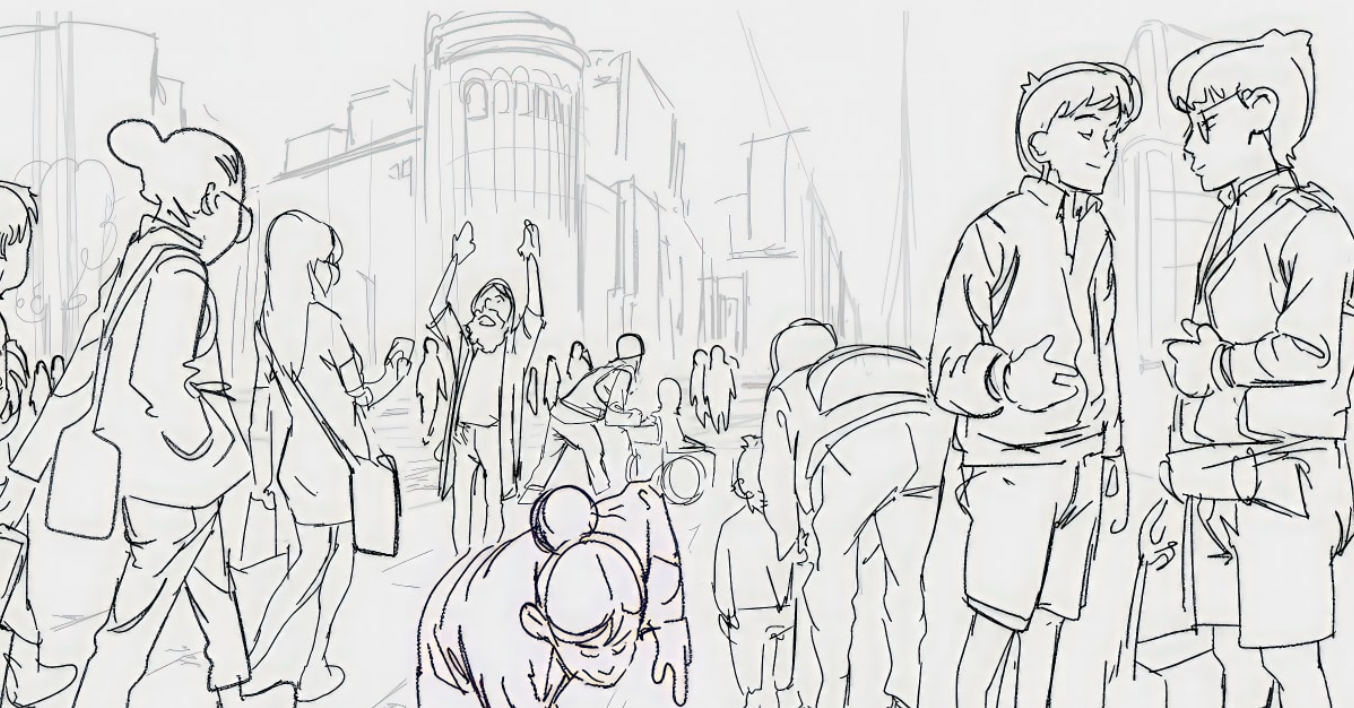
Made by Tom Fox
I reached out and asked what he did. He said: "Just draw tons of mannequins."
So I did. And something clicked. When I stopped chasing nice results and started deconstructing drawings, everything changed.
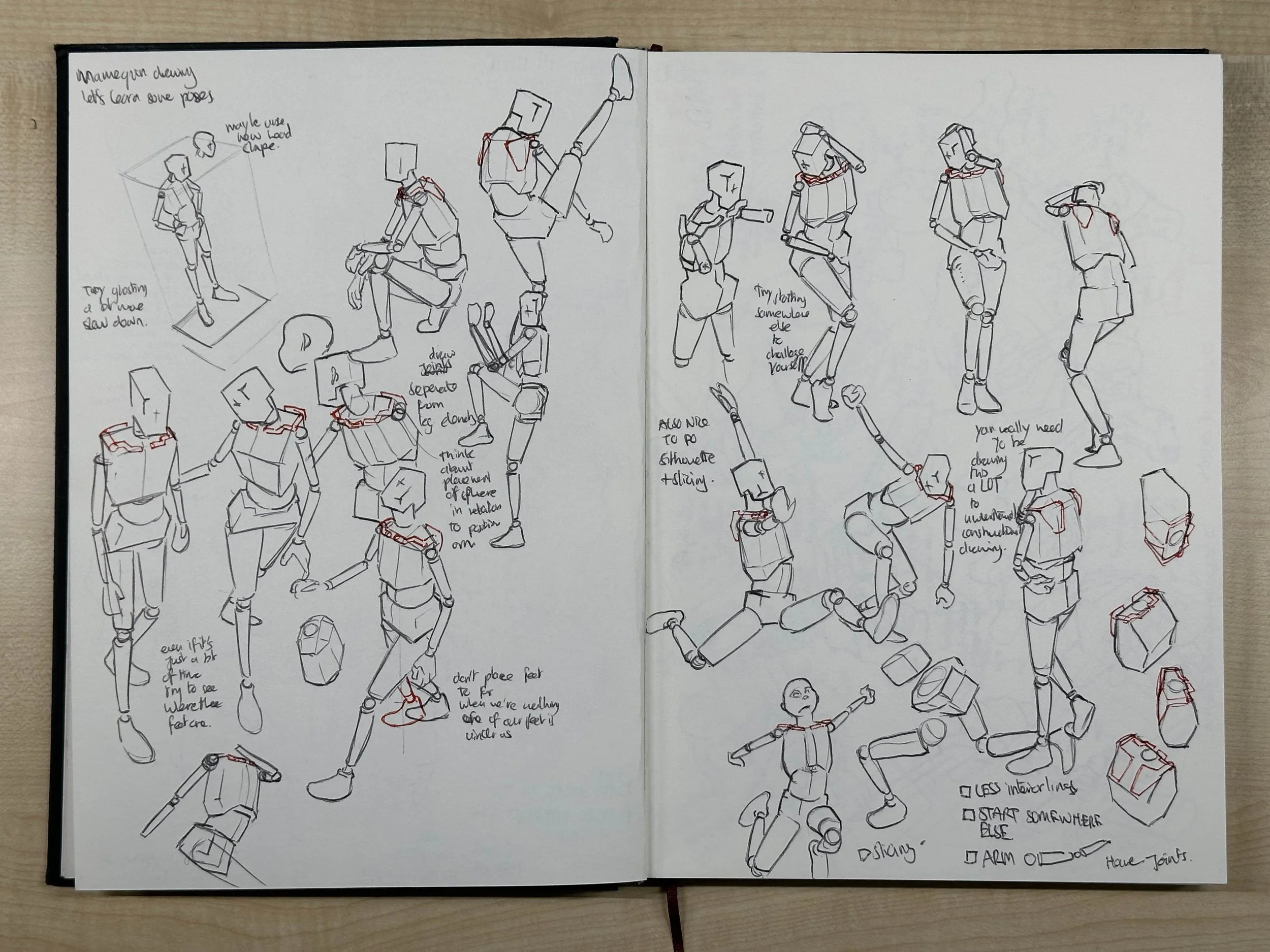
How to simplify
Instead of overloading your brain, make learning easy by focusing on one thing at a time. There are two main ways to do this.
1. Study a fundamental
Spend a few days focusing on one fundamental, for example, perspective. Draw grids. Fill them with boxes. Repeat. It's boring, yes. But you will get better at placing things in space. That skill transfers directly into drawing from imagination.
2. Slowly increase the complexity of your figure
Start with a simple figure, even a 2D stick figure, and apply one fundamental like gesture until you can draw it from imagination. When that gets easier, increase the complexity or add another fundamental, like perspective or form. You're layering fundamentals one by one, letting your brain understand them on a simple figure before complexity increases.
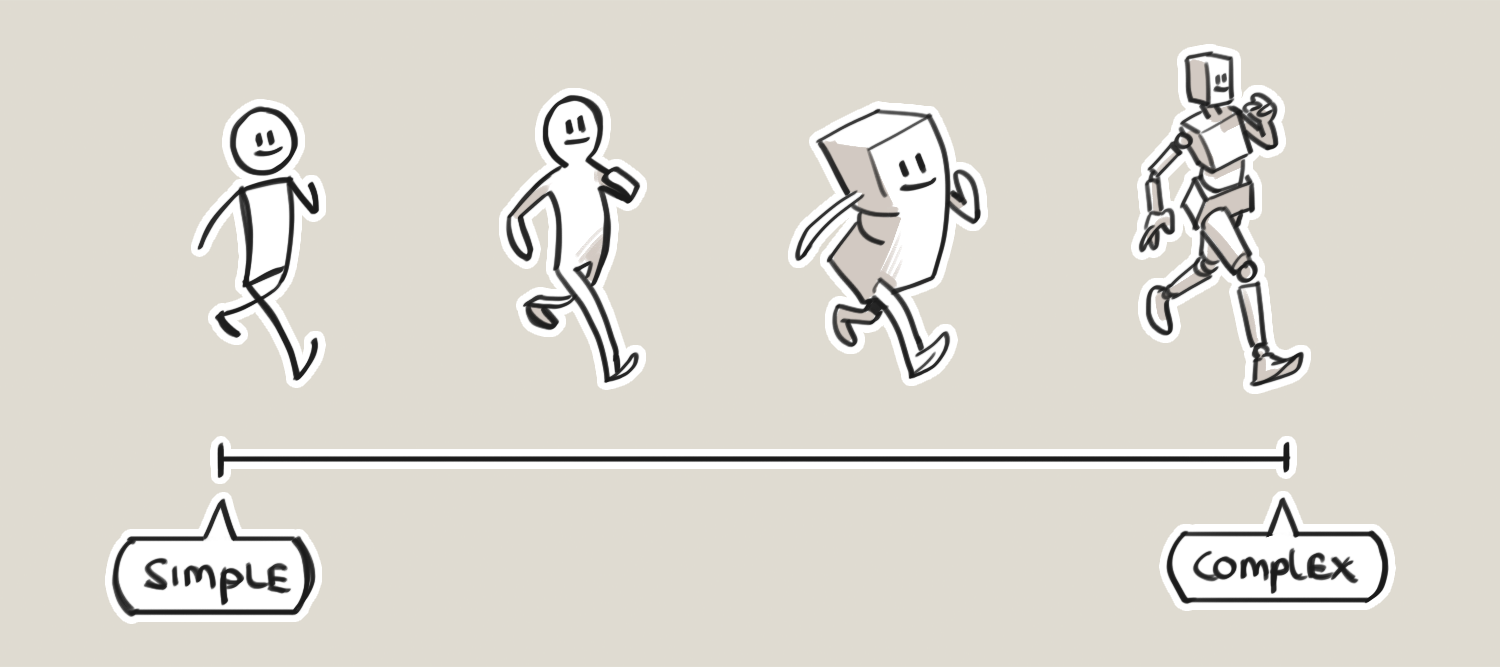
This is the method I use in DFIA – the Drawing From Imagination Academy.
Simple first, complex later
If you struggle to draw from imagination, you're not lacking talent. Your brain is doing exactly what it's supposed to do, protecting itself from overload.
Stop giving it a thousand things at once. Simplify the figure. Focus on one fundamental at a time. Let understanding build before complexity does.
Once that foundation clicks, everything else follows naturally. Not because drawing got easier, but because your brain finally has something solid to build on.
